
Nicholai La Barrie’s An Ideal Husband
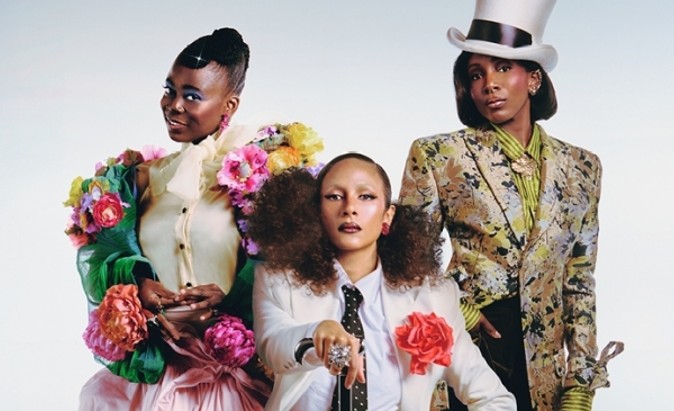
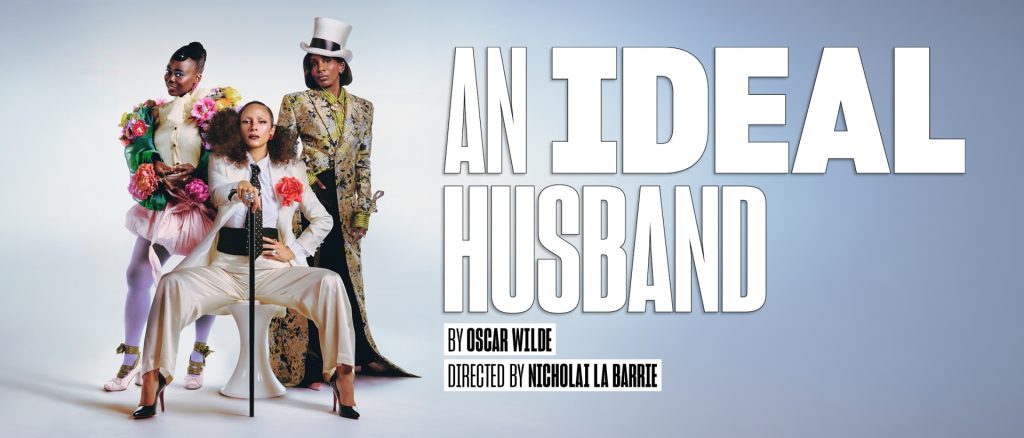
The poster for An Ideal Husband at the Lyric Hammersmith Theatre was both a seduction and a warning. It shows three Black women in flash-dandy attire, two of them with gender-bending style and “don’t come hither” stares. It advertises the production as fun, modern, and not at all for Wildean purists.
Thankfully, the play lives up to the promise, and one would have to be a stone-hearted traditionalist indeed not to relish the sheer joy of director Nicholai La Barrie’s production. An Ideal Husband is a riot. La Barrie, his creative team and his all-Black cast reinvigorate the play into a spectacle of dance, music, rambunctious comedy, and spectacular costumes. To borrow a term from a current film about Henry Paget, starring erstwhile Lord Goring Rupert Everett, it is all madfabulous.
The performance begins with a sozzled Lady Markby and Countess of Basildon (Suzette Llewellyn and Nimmy March), both in colourful Caribbean garb, bitching about London parties and people in Jamaican accents. They enter to rump-shaking club music that got many in the audience grooving in their seats. The cast then danced across the stage to a booming beat, making it clear that this was not just a play but a party, and we’re here to have a blast.
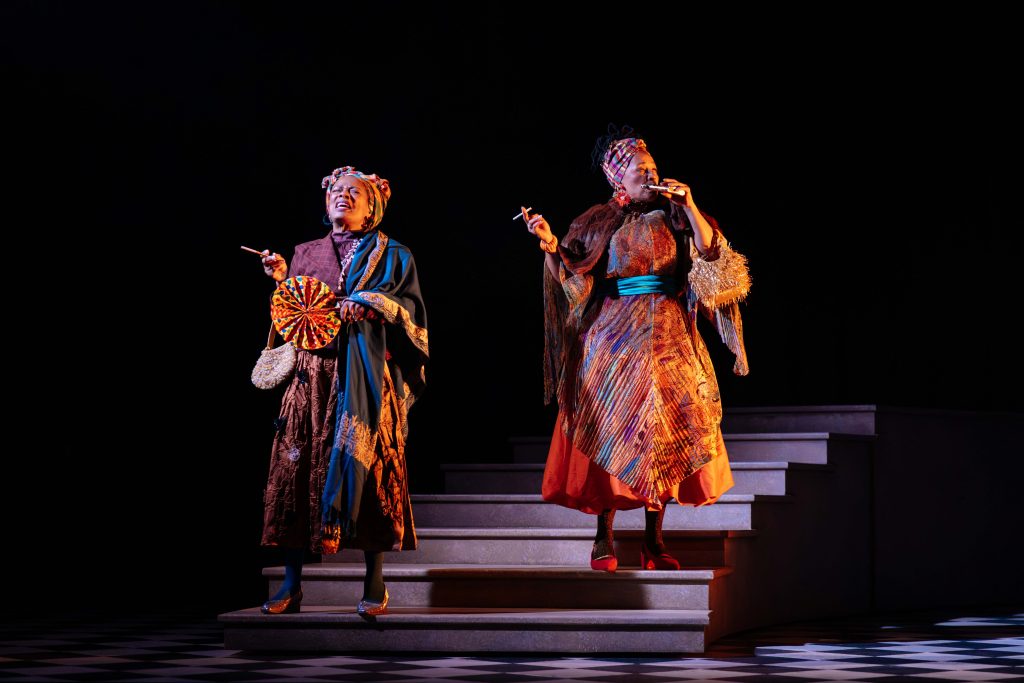
Suzette Llewellyn and Nimmy March. Photo by Helen Murray
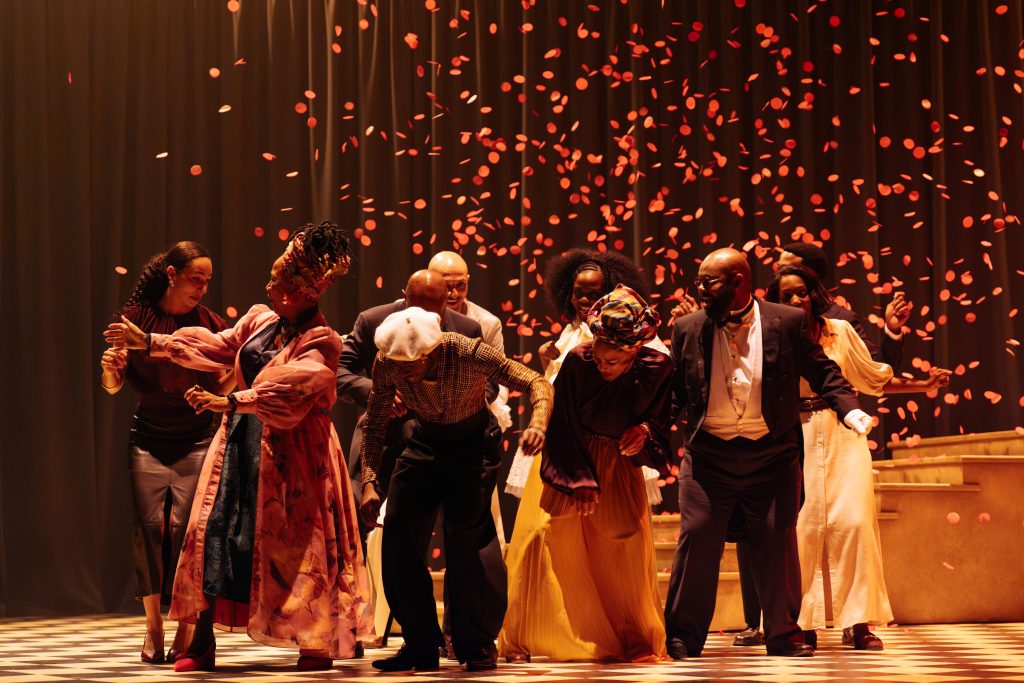
The cast dances. Photo by Helen Murray
At the outset Llewellyn, March and Jeff Alexander as the Earl of Caversham all stake a claim to being the standout comedic performance, raising the expectations sky high for the actor playing Lord Goring, the Wilde-like wit at the heart of the play. Then Jamael Westman swooshes in to take the crown. Aided by outfits from set and costume designer Rajha Shakiry, Westman dazzles both with his outlandishly gay quips and movements, but also with his swerves into sincerity as he counsels both of the Chilterns on their dicey predicaments.
Westman’s Goring is so flamboyant that it gives an added frisson to his “romance” with Mabel Chiltern, given a saucy read by Tiwa Lade. When Robert Chiltern announces his ambivalence about their prospective wedding, the audience can’t help but empathize — especially those who remember the marriage of the play’s author.
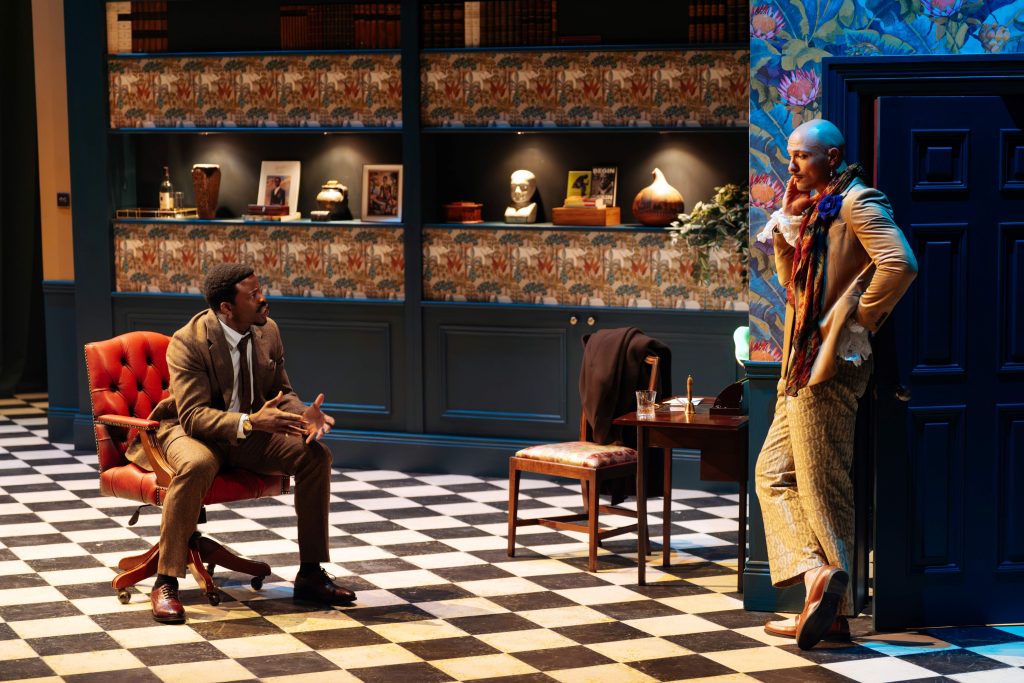
Chiké Okonkwo and Jamael Westman. Photo by Helen Murray
While the cast give Wilde’s jokes a fresh reading, they also splash out with bits added to zhuzh up the characters. Emmanuel Akwafo as the Chilterns’ put-upon butler Mason benefits the most from this in Act One, stealing scenes with a deadpan glance; in a running gag, one of the Chilterns will say “We appreciate you, Mason,” to which he replies with a snarky “Mmm-hmm”. Akwafo gets even more laughs in Act Two when he doubles as Lord Goring’s valet Phipps, a ferociously camp character who seems more lover than manservant.
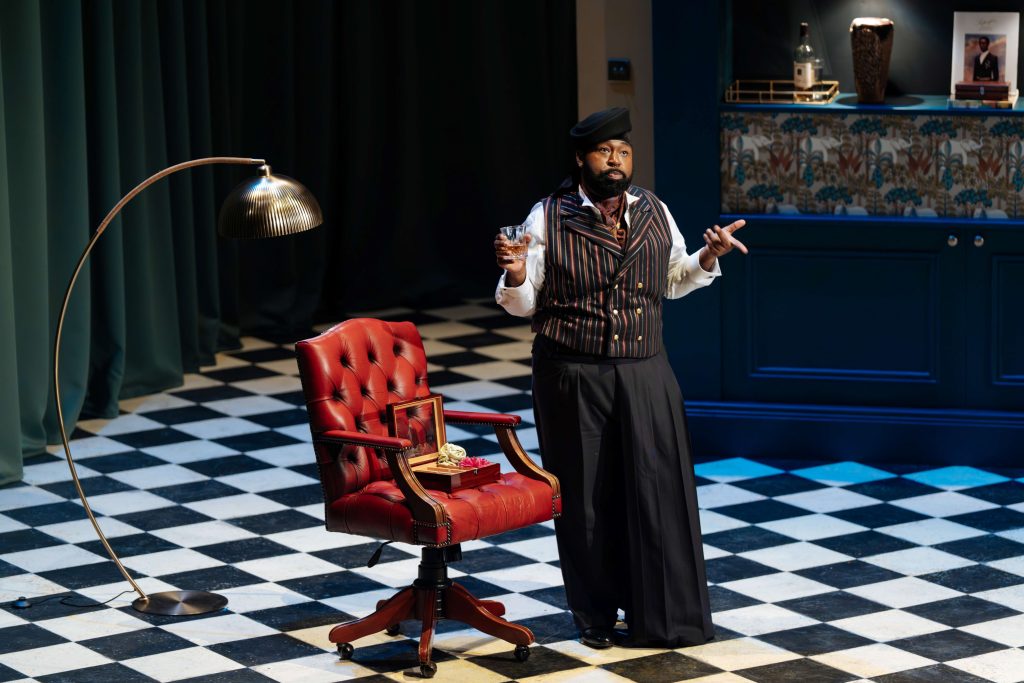
Emmanuel Akwafo as Phipps. Photo by Helen Murray
Even with so many actors dialling it up to 11, La Barrie doesn’t allow the razzamatazz to dilute the particularly pertinent political messages. When has a play about government insiders selling information seemed more relevant? As Mabel and Robert Chiltern, Tamara Lawrence and Chiké Okonkwo carry the weight of the play’s moralising, and they do this magnificently without seeming out of place amongst the more extravagant aspects of the play. With his remarkable bass voice, Okonkwo lightens his performance with little touches, such as sliding his chair across the stage during a scene with Goring.
The one actor who does not seem to be having a ball with her character is Aurora Perrineau as Mrs Cheveley. This is surprising, given that Wilde wrote her as a lip-smacking melodrama villain; if she had a moustache, she’d twirl it. Lawrence rushes her lines and never leans into the character’s nastiness, de-fanging the foil to the Chilterns’ upright virtue.
Amongst the production team, two other members should be noted. Casting director Heather Basten, CDG, put together the mix of talents whose styles, while different, work together beautifully. Movement director Alexzandra Sarmiento spices up scenes with clever comedic turns, as well as presumably choreographing the dance scenes. (Seriously, how many productions of An Ideal Husband demand a shout-out to their movement directors?)
In recent years, London has enjoyed some of the most creative and sheerly enjoyable versions of Wilde’s plays, from Dominic Dromgoole’s starry Wilde season to the Sydney Theatre Company’s multimedia tour de force Dorian Gray to the National Theatre’s race-blind, campy Importance of Being Earnest. Nicholai La Barrie’s An Ideal Husband stands amongst these triumphs, and exceeds them in one notable way: it drew the most diverse audience this reviewer has seen for a Wilde show. They loved it, and so did I.
The reviewer attended the matinee on Saturday 30 May 2026. Nicholai La Barrie’s production of An Ideal Husband can be seen at the Lyric Theatre, Hammersmith, until 6 June and at the Bristol Old Vic from 10 to 20 June.
https://lyric.co.uk/shows/an-ideal-husband/
https://bristololdvic.org.uk/whats-on/an-ideal-husband